Sunday, August 26, 2012

10 POINTS TO CONSIDER WHILE DESIGNING A BROCHURE


ILLUSTRATED WITH EXAMPLES
(Examples are taken from copyright materials on internet; therefore it may be fine to view these examples but may not be appropriate to copy or to use them. Analysis of these examples are views of the author and may not necessarily be in line with views of the owners of the examples)  
Considerations on Brochure Design are specific to the purpose of the brochure. However, here is an attempt to put up some important points one may in general like to consider while planning to design a brochure.


1.    Clear and unambiguous depiction of the Theme


A good brochure should convey the theme in the clear and unambiguous way. Following examples illustrate the point:-

Examples:-        
 
 
The above brochure of Phillips Taylor Brown (http://www.ptb.co.uk/) seems to demonstrate the theme of the IT Support Services company as something meaning to be : "Seamless Synchronization with Client (Technologies) to yield Enhanced Performance following the Industry Standard Best Practices"
 
       Theme appears to be something like: 'Committed for the sake of Nature'
 
        Theme appears to be:close to 'Save Precious Water'

2.    Emphasis on Visuals

 
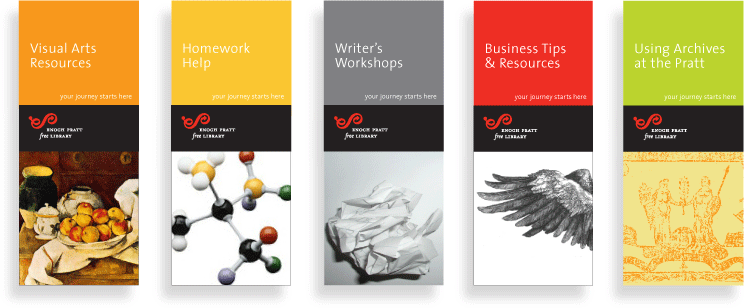
In many good brochures, much of the message is conveyed by visuals, only little written text is used to precisely put the key points and to display critical information needed by target audience.
 
 
Example:-
 

3.    Catchy Tag Lines


In general brochures contain catchy tag lines to give the message in short and effective way. In the following art related brochure, a few tag lines suggest about - what exactly the art is going to make the target audience feel like?
Example:-

i. http://www.behance.net/gallery/Saint-Louis-Ballet-Company-aABallet-Is-Here/756265

Tag Lines:
Ballet is here, see where we can take you..... 

Ballet is passion.... Summer Season
Ballet is Adventure, Novelty, Prestige, Invention, Passion.....

Above Tag Lines, seems to convey - "Taking Ballet Dance lovers to a different world, where they will explore new horizons in dancing and have a fulfilling experience"

4.    Display of promoters, associated groups, accredited certificates

 
Presence of ‘Logos of Associated Groups’ are prominently displayed in good brochures to highlight the groups supporting the cause . Display of certifications adds to credibility and quality. This can be seen in the following examples....
Examples:
    (Select 'Full Screen' options)
 

5.    Showcase of Excellence / Show Unique Attributes

 
Generally Brochures Showcase the Excellence through highlighting key points expected to be appreciated by target audience like -> Unique Attributes / Wider Reach / Progressive Excellence / Achievements / Progress / Growth / Evolution / How things got shaped, what lies ahead…..
Examples:


6.    Professional Photography


Good use of photography can play a critical role in brochure design. At times professionally taken Pictures (and at times Use of Black and White Pictures or a Meaningful Painting) can create a big impact…
Examples:
Good Use of Black and White Photography, Painting and meaningful Picture of ancient devine sculpture in Yoga related Brochure:-
i. http://www.dakinigraphics.com/port_coll_yoga.htmii. 

Good use of photography:
ii. http://queenslandballet.com.au/assets/files/Attend/QB_Season_2012_Brochure.pdf              

7.    Brochure with Pocket


Brochure with Pockets are considered to be much popular with the audience / Pockets also facilitate providing a related CD/DVD / Feedback form…. 
Example:
i. http://www.stevenjoniak.com/hsbc-del-sorbo-group-brochure/hsbc-brochure2/

8.    Brochure Folding Styles


Brochure Folding Styles should also be considered among other attributes of Brochure Design
Example:
i. http://www.essence.co.in/brochure_1.html

9.    Cover Page and Background Images


A self explanatory Cover Page and an attractive Background Images can make a big difference.
Examples:

Background:-
i. http://ringvemedia.com/
ii. http://www.123rf.com/stock-photo/brochure_background.html

Cover Page:-
i. http://bruceblackburn.com/development/epfl_standards/images/brochurecovers.png

10.    Internet Presence in Contact Details


Expectations for internet presence are high from net savvy audience. It may be good to have complete contact details explicitly showing presence on the internet, which may include:-
i)              E-mail
ii)             Web-Site
iii)            Social Networking sites like - Pinterest / Twitter / Facebook / LinkedIn
iv)            Blog


(ALL THE WEB-SITES MENTIONED IN THE POSTING WERE LAST ACCESSED ON 26 AUG 2012)

/**********************/

Monday, August 20, 2012

HOW ABOUT A UNIVERSITY OF FINE ARTS IN RAIPUR?

Sharing the Business Plan for 'University of Fine Arts in India' (proposed location - Raipur, Chhattisgarh). This is purely an academic work in the area of social entrepreneurship, which was submitted in the year 2010 as an assignment for course 'ENTREPRENEURSHIP AND GENDER' (ME2808 Entrepreneurship and Gender 7.5 credits) conducted by KTH, Stockholm. If you like the idea, please feel free to share it on your website or blog. Please do not put the business plan on any other server or provide a direct PDF download.

THE IDEA:

The business plan is to start a “University of Fine Arts” in the city of Raipur, India. This non-profit earning initiative is aimed at facilitating formal education in the area of Fine Arts in the Chhattisgarh region of India. Establishment of the university will help the cause of promoting awareness for different forms of human expression among residents of Chhattisgarh. It will also encourage a much focused study on way of lives of different tribes residing in remote areas of Chhattisgarh.

Art is a medium to express human emotions. Different forms of artistic expressions play key role in bringing sensitive social issues in public domain in true spirit of communicating the reality. Therefore, they present problems from perspectives, which are quite different from those being propagated through other accessible media (like electronic and print media) by influential agencies (may even include propaganda by different governments) for vested interests.

India is an ancient civilization trying hard to synchronize with the advanced countries in the on-going rapid changes sweeping across the globe. It is encountering many problems in different spheres. Democracy in India can be called a “Functional Anarchy” (as termed by John Kenneth Galbraith long back) to express the extent of irregularities in its governance and public administration. Identity politics, corruption, inequality and nepotism are not allowing  representative social leadership to evolve. Indian society is highly fragmented in terms of social status and heavily divided on caste lines. In remote areas, many tribal communities are endangered to extinction and so are their traditional art forms. Crimes against women are consistently rising in India. India has a very poor record in gender equality (in 2009 it has been ranked poorly at 114th position). India is also lagging in other indices of human development. On the other hand, Naxal movement (an extremist movement in favor of communist school of thoughts) is fast catching up in different parts of the country, especially in the state of Chhattisgarh. Thus, a need for an honest and effective medium to express problems from different perspectives appears evident. Working towards developing an infrastructure for promoting art form as expressions of public voice could be one of the best possible ways to harmonize different sections of society with governance. It will help in maintaining critical equilibrium among different forces by accommodating the un-heard off voice, public voice, government voice and the voice of international community. This will be instrumental in making the democracy function in sensible way thus contributing to an inclusive and sustainable growth.

On the other hand, lead by the encouraging progress in economic front, developments in last couple of decades have brought about unprecedented changes in social order in India. Despite deeply rooted traditional values, the vibrant population of this culturally diverse country has by and large reacted positively to the changes. A multi-dimensional transitioning process has been underway, which will eventually result in an evolution. However, there has not been any significant change in the field of formal education. To meet with the demands of emerging knowledge based industries, formal education is generally supplemented by external trainings mostly offered through training institutes. Highly regulated education system needs reforms to be able to come up with institutions matching world standards. Moreover, there is a need for creating infrastructure to support education in those areas of academic excellence which may not be directly useful to be absorbed by existing industrial set up but which have deep association with society and with development of mankind.

Current educational environment is conducive for establishment of world class University for faculties of Fine Arts. There are many reasons to support this. First is educational reforms are round the corner. Secondly, there are not many schools of Fine Arts in India. Thirdly, there are clear evidences supporting an inclination of youth towards diverse areas of studies including Fine Arts. Fourthly, with rising standard of living of the middle class, most parents are now in a position to financially support students for higher studies. Finally, on-going rapid development is opening numerous avenues in all the fields both at home and abroad. Thus, there is good possibility for many avenues of livelihood getting opened for scholars of Fine Arts.


The Business Plan can be accessed at:-
BUSINESS PLAN - UNIVERSITY OF FINE ARTS IN INDIA


/******************/

Wednesday, July 18, 2012

BUSINESS OF RETIRED LIFE HOMES IN INDIA


Sharing the Business Plan for 'Retired Life Homes in India' (the 'Devine Homes'). This is an academic work and none of the authors of the plan ever intended to do the business. If you like business idea, please feel free to share it on your website or blog. Please do not put the business plan on any other server or provide a direct PDF download.


BUSINESS PLAN - DEVINE HOMES FOR RETIRED LIFE

VIDEO - A Brief on the Business Idea


The work was submitted at KTH, Stockholm as an assignment to the course 'ME2801 Planning - Developing a Venture 7.5 credits' in OCT-DEC 2009.


/******************/

Monday, July 2, 2012

ASSESSMENT OF BUSINESS OPPORTUNITIES INVOLVING A RADICAL CHANGE IN ESTABLISHED FIRMS


My Master Thesis on 'Framework for Assessment of Identified Opportunities Involving a Radical Change in Established Firm' can be accessed at the link given below:-
https://docs.google.com/open?id=0BwOOneTw-vSdR3d5U1dGN2Job3c

The abstract and a brief background to the thesis are given below. If you like my thesis, I would be pleased if you share it on your website or blog. Please do not put my thesis on your own server or provide a direct PDF download.


ABSTRACT

Established firms evaluate the available opportunities while planning for expansion involving radical change. To facilitate management practitioners in carrying out competency based analysis for assessment of opportunity for such corporate entrepreneurial initiative, the paper develops a workable framework.

To accomplish the assessment, the paper suggests listing the competencies of current business with their respective characteristic features by following a process involving a series of analysis. Thereafter, in a similar way, it is suggested to list the competencies required for the proposed business by going through another similar process involving analysis from different perspectives. With the details of characteristics features of existing competencies and required competencies available in hand, an assessment of efforts required to develop required competencies is done. For each of the required competency, the possible efforts are expressed in two dimensional attributes of Criticality and Risk. It is advised to select an opportunity having most of Critical competencies falling in low Risk domain.

In the end, the paper tests the framework for following two opportunities identified by Icon Computer Solutions (a web site development company located in Raipur, India) for business expansion:-

(a) Software Product Development

(b) Computer Networking Services

The assessment indicates that with existing competencies, the firm is in a position to make the transformation for second (Computer Network Services) expansion opportunity with lesser risk.


BACKGROUND

In the ever evolving world of business, every firm needs consistent transformation to keep in pace with the on-going changes in environment. Most often such transformations are incremental in nature and are engineered with the intent to fine tune the business to re-align with minor changes in the industrial environment.

However, at times firms take strategic initiative to transform the business by bringing a radical change to the existing business. Reason for such an initiative could be a response to phenomenal changes making in-roads into the environment (of the existing business), an ambitious move for expansion of the existing business or a motive to grab a lucrative opportunity looming within the reach.

Selection of a suitable opportunity for such a corporate entrepreneurial initiative has been a matter of debate in the area of management studies. One of the popular views (Hamel and Prahalad, 1994) on this topic insists that a firm should try to build a new business around its core competencies. But, there have been many examples of firms successfully extending in a business un-related to their main line of business.

In any case, selecting an appropriate opportunity where the existing strength of a firm (derived from its core competencies) can be utilized holds the key for success of any major transformation. The selection involves a decision making. This paper attempts to find a way to assist decision making for selection of a suitable opportunity (from identified opportunities) to yield intended benefits.


/******************/ 

Monday, June 11, 2012

A GLIMPSE OF SOCIAL DEVELOPMENT IN INDIA


The Human Development Report (HDR) published by the United Nations Development Programme (UNDP) estimates the HDI (Human Development Index) in terms of three basic capabilities: to live a long and healthy life, to be educated and knowledgeable, and to enjoy a decent economic standard of living. According to HDR 2011, the HDI for India was 0.547 in 2011 with an overall global ranking of 134(out of the 187 countries) compared to 119 (out of 169 countries) as per HDR 2010. However, a comparable analysis of the trends during 1980-2011 shows that although lower in HDI ranking, India has performed better than most (including high and very high human development) countries in terms of average annual HDI growth rate. (Economic Survey 2011-12)

Progress on Millennium Development Goals (MDGs) is summarized in table 1 (given below). Summary suggests that India is bridging the gaps in education, healthcare, water and sanitation and telecommunication connectivity at satisfactory rate. More efforts are required in the area of poverty reduction, mal-nutrition, child mortality and sustainability.

Table 1:


GOALS / TARGETS

DESCRIPTION
INDICATORS
STATUS

Goal 1
Eradicate Extreme Poverty and Hunger


Target 1
Halve, between 1990 and 2015, the proportion of people whose
income is less than one dollar a day
Indicator - Poverty Headcount Ratio
Poverty reduction calls for new and sharper rate of reduction
Target 2
Halve, between 1990 and 2015, the proportion of people who
suffer from hunger

Persisting under nourishment
Goal 2
Achieve Universal Primary Education


Target 3
Ensure that by 2015, children everywhere, boys and girls alike, will be able to complete a full course of primary education
Net Enrolment Ratio in primary education
Proportion of pupils
starting Grade 1 who
reach Grade 5
Literacy rate of 15-24 year
Olds
Achieving Universal primary education ahead of MDG target
Youth literacy is progressing on track
Goal 3
Promote Gender Equality and Empower Women


Target 4
Estimate gender disparity in primary and secondary
education, preferably by 2005, and in all levels of education ,
no later than 2015
Ratio of girls to boys in
primary , secondary and
tertiary education
Ratio of literate women to
men ,15-24 years old
Share of women in wage
employment in the nonagricultural
sector
Gender disparity in primary and secondary education is set to disappear

Gender parity in youth literacy tends to be a reality

Women’s share in wage employment is yet to improve
Goal 4
Reduce Child Mortality
Under- Five Mortality Rate
Infant Mortality Rate
Proportion of one year
old children immunized
against measles
Faster improvement in child survival required
Goal 5
Improve Maternal Health


Target 6
Reduce by three quarters between 1990 and 2015, the
Maternal Morality Ratio
Maternal Mortality
Ratio ( MMR)
Proportion of births
attended by skilled health
personnel
Life risk to motherhood takes a turn for the better
More gaps to be bridged for achieving safe motherhood
Goal 6
Combat HIV/AIDS, Malaria and other
Diseases


Target 7
Have halted by 2015 and begun to reverse the spread of
HIV/AIDS
HIV prevalence among
pregnant women aged 15-
24 years
Trend reversal in prevalence of HIV/AIDS continues
Target 8
Have halted by 2015 and begun to reverse the incidence of
Malaria and other major diseases.
Prevalence and death
rates associated with
Malaria

Prevalence and death
rates associated with
Tuberculosis
Reversing trends in Prevalence of Malaria and TB

Goal 7
Ensure Environmental Sustainability


Target 9
Integrate the principles of sustainable development into
country policies and programs, and reverse the loss of
environmental resources.
Proportion of land area
covered by forest

Ratio of area protected
(to maintain biological
diversity) to surface area

Energy use per unit of
GDP( Rupee)
Environmental measures covered up much of  losses
Target 10
Halve, by 2015, the proportion of people without
sustainable access to safe drinking water and basic
sanitation
Proportion of population
with sustainable access
to an improved water
source, urban and rural

Proportion of population
with access to improved
sanitation, urban and
rural


Earlier achievement of safe drinking water to all

Improved Sanitation facility still eludes half the households
Goal 8
Develop a Global Partnership for
Development


Target 18
In cooperation with the private sector, make available the
benefits of new technologies, especially information and
communication
Telephone lines and
cellular subscribers per
100 population

Internet subscribers per
100 population
Connecting India is in fast progress

Source: Table prepared from the details published in MILLENNIUM DEVELOPMENT GOALS INDIA COUNTRY REPORT 2011, Central Statistical Organization, Ministry of Statistics and Programme Implementation, Government of India
Probably, the biggest among these challenges is poverty reduction. The lasting solution would promote reduction in poverty by creating an environment, which would provide beneficiaries with a means to earn for themselves and become self reliant. For this, one of the ways is to indentify certain traditional sectors (based on demographic analysis of available skills) and adopt favorable policies in these sectors to promote small scale entrepreneurship with a thrust towards special promotion to village level entrepreneurship. Trainings on self employment and on financial literacy need to be conducted as a part of awareness generation and capacity building exercise.

Ease of availability of banking services to most ordinary person residing in remotest location is required to promote entrepreneurship. Promotion of Financial Inclusion is an attempt in this direction. Following RBI Guidelines ‘Business Correspondent Model’ and ‘Business Facilitator Model’ have been introduced to take banking to unbanked populations. Experiences so far with implementations of these models were not encouraging as banks are not able to generate workable revenues through implementation of these models. Such effort could be further enhanced by a) Facilitating poor people at grass root level to use banking as a mechanism to help themselves on their endeavors to enhance earnings b) Introduction of innovative financial instruments targeted at low-amount / high-volume savings of rural population, c) Giving incentives to banks on achieving high scale no-frill account transactions and d) Supporting banks to understand the financial behavior of different segments in low earning capacity.

There are also different financial institutions to further the cause of upliftment of the weaker sections of society. The National Scheduled Castes Finance and Development Corporation (NSCFDC), National Safai Karamcharis Finance and Development Corporation (NSKFDC), National Backward Classes Finance and Development Corporation (NBCFDC), and National Handicapped Finance and Development Corporation (NHFDC) provide credit facilities to their target groups at concessional rates of interest for various income generating activities. During 2011-12, 1.42 lakh beneficiaries were disbursed loans as on 31 December 2011, as compared to 1.34 lakh beneficiaries during the corresponding period of 2010-11. (Economic Survey 2011-12)
 
But, the bigger hurdle in creating an environment which would enhance the possibilities for productive engagement of poor (and unskilled masses) is to bring about an attitudinal change (to fully utilize the changing environment) among masses trapped in poverty due to hopelessness in a lacking environment. The difficulty becomes more obvious in a country (like India) with high volume, great diversity, un-even development and lacking coordinated effort (convergence and synchronization in projects/schemes/programs undertaken).
In parallel, problems of mal-nutrition, child mortality and sustainability would need much effective government programs. In this regards, awareness generation at different levels across the society may contribute to accelerate efforts of government. Much of the elaborations on how can government programs be executed effectively depends on how well governance could be improved. Many experts believe that establishment of E Government would result in improved governance and better execution of government programs related to improvement of socio-economic conditions.
Thus, going ahead, following could be the main priorities:-
a)    Working towards MDI and towards improving Human Development through making available all the basic infrastructure and institutional support.
b)    Creating opportunities for rural self employment.
c)    Bridging the disparity on accessibility to resources across different sections of society.

REEFERENCES:-
Please refer to REFERENCES section given in the blog ‘ICT FOR DEVELOPMENT IN INDIA’
/*********************/